In the next twenty years, we think the economic gap will get bigger between developed and developing countries. Developing countries will become more in debt and lose more of their resources, developed countries won't be willing to help anymore. MNC's will take over and westernize their countries and culture making them more and more dependent on these companies.
Also, in twenty years since there will be so many MNC's, pollution will get worse. Government won't treat people fairly in developing countries because they will be trying to drag MNC's into their country by lowering human rights laws.
Friday, April 30, 2010

Thursday, April 29, 2010


Wednesday, April 28, 2010
Task #4
UNICEF

UNICEF was created by the UN General Assembly on December 11, 1946 as a temporary organization called the United Nations International Children’s Emergency Fund to respond to the suffering of children in European countries devastated by World War II. In 1953, UNICEF became a permanent part of the United Nations system, its task being to help children living in poverty in developing countries such as Asia, Africa, the Middle East, and Latin America. Its name was shortened to the United Nations Children's Fund, but it retained the acronym 'UNICEF', by which it is known to this day.
This program helps children get the care they need in the early years of life and encourages families to educate girls as well as boys. It strives to reduce childhood death and illness and to protect children in the midst of war and natural disaster. UNICEF supports young people, wherever they are, in making informed decisions about their own lives, and strives to build a world in which all children live in dignity and security.
some facts...
This program helps children get the care they need in the early years of life and encourages families to educate girls as well as boys. It strives to reduce childhood death and illness and to protect children in the midst of war and natural disaster. UNICEF supports young people, wherever they are, in making informed decisions about their own lives, and strives to build a world in which all children live in dignity and security.
some facts...
- UNICEF procures vaccines for 40% of the worlds children, which is nearly 3 billion doeses annually.
- They are the largest buyers of mosquito nets, procuring 25 million nets in 2006.
- With educational supplies, over 12 million kids went back to school in 2006 with the support of UNICEF.
- A generation ago, 70,000 children died each day. Today that number has been cut by more than half
- Thirty years ago, 1 in 4 children died before the age of five. Today that number is less than 1 in ten.
- This year, 3 million more children will live to their fifth birthday than in 1990, and tens of millions will lead healthier, more productive lives.
- In 1980, 10 percent of the world's children were immunized against the six killer diseases. Today, that number is over 75 percent.
Thursday, April 22, 2010
task #3

Mcdonald's

Ray Kroc invested his life savings to become the distributor of a milk shake maker called the Multimixer. He came accross a hamburger shop owned by Mcdonald brothers in California and suggested that they open up more restaurants offering to work for them.
The first Mcdonald's opened in 1955 in Chicago, and 6 years later Ray bought the business from the brothers. By 1965 there were more than 700 sites in existence across the United States.
By 2003, the corporation held over 31,000 sites in 119 countries. There are more than 1,400 McDonald's restaurants in Canada employing more than 77,000 Canadians. Antarctica is the only continent without a Mcdonald's.
McDonald's is one of several giant corporations with investments in vast tracts of land in poor countries, sold to them by the dollar-hungry rulers (often military) and privileged elites, evicting the small farmers that live there growing food for their own people.
Its global reach and broadly standard product line and level of service have led to McDonald's becoming the target of anti-globalization protests, and as the highest-profile fast food company, it is often blamed for obesity and excessive packaging waste.
Mcdonalds is the largest user of recycled paper in the industry, which includes such items as trayliners, fry boxes, serviettes, carry out bags and drink holders.
They continually monitor and refine their Waste Reduction Action Plan that focuses on the three R's - Reduce, Reuse and Recycle - in their restaurants and with their suppliers. McDonald's has always been responsive to their customers and, over the years, has sought the advice of industry experts and the environmental community to ensure that they continue to make a difference in this important area.

McDonald's is one of several giant corporations with investments in vast tracts of land in poor countries, sold to them by the dollar-hungry rulers (often military) and privileged elites, evicting the small farmers that live there growing food for their own people.
Its global reach and broadly standard product line and level of service have led to McDonald's becoming the target of anti-globalization protests, and as the highest-profile fast food company, it is often blamed for obesity and excessive packaging waste.
Mcdonalds is the largest user of recycled paper in the industry, which includes such items as trayliners, fry boxes, serviettes, carry out bags and drink holders.
They continually monitor and refine their Waste Reduction Action Plan that focuses on the three R's - Reduce, Reuse and Recycle - in their restaurants and with their suppliers. McDonald's has always been responsive to their customers and, over the years, has sought the advice of industry experts and the environmental community to ensure that they continue to make a difference in this important area.

Wednesday, April 21, 2010
task #2

Ghandi- India's decolonization
After WW1, Indian National Congress staged demonstrations against British Rule but India still had problems achieving independence.
India was divided by religion since Hindus and Muslims both still existed, however the Muslims were scared because they were seen as a minority. Britain would not let go of India because it was worth too much to them. They began to arrest people in India without cause.
British government had outlawed large gatherings and 10,000 unarmed Indians assembled a walled garden in Armritsar. 400 people dead, 1,200 wounded by British.
India was divided by religion since Hindus and Muslims both still existed, however the Muslims were scared because they were seen as a minority. Britain would not let go of India because it was worth too much to them. They began to arrest people in India without cause.
British government had outlawed large gatherings and 10,000 unarmed Indians assembled a walled garden in Armritsar. 400 people dead, 1,200 wounded by British.
Ghandi rose as a pacifist leader of the Indian nationalists and educated in England and practiced law he believed in civil disobedience to solve problems. He refused to support the British by buying their goods. The British government arrested Gandhi in 1922 and India had little success until he returned in 1930.
When Ghandi was released the British government had control of salt mines and ocean salt fields and Indians were unable to gather their own salt. Ghandi led thousands on a march from Ahmadabad to the seas – 200 miles.
British arrested thousands of Indian people, but not Ghandi.
In 1935, India's government gives them control of agriculture, education, health, and public works.

Monday, April 19, 2010
task #1
 ^GDP per capita.
Developed Countries are first and second world countries. Developed countries are industrialized, and have a high standard of living when it comes to education, food, and medical care.
-United States
-Japan
-Western Europe
-Canada
-Australia
-New Zealand
-USSR
Developing Countries are third and fourth world countries. They are agricultural and lack basics such as sanitation and education. Also they lack natural and human resources that are essential for economic development.
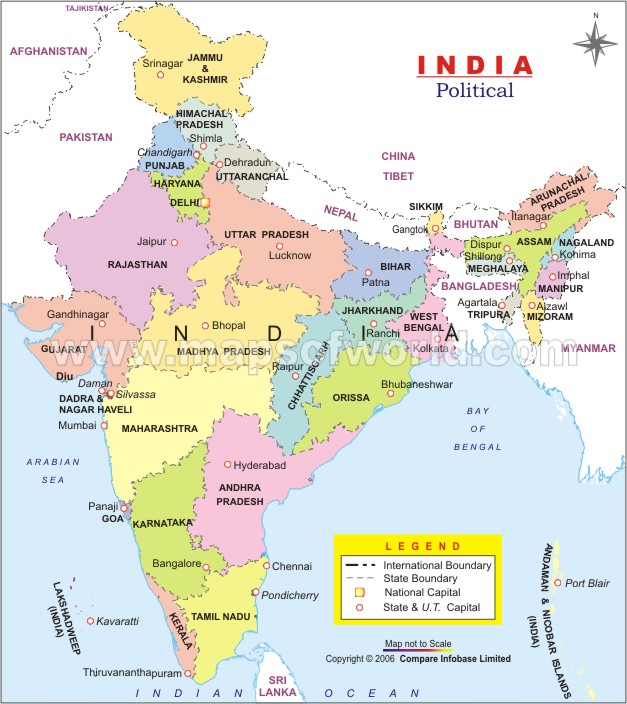
-India
-Haiti
-Thailand
-Morocco
-Algeria
-Cuba
-Tehya and Becca.
Subscribe to:
Comments (Atom)
